The Graceful Pause: What to Say When You Haven’t Got the Answer

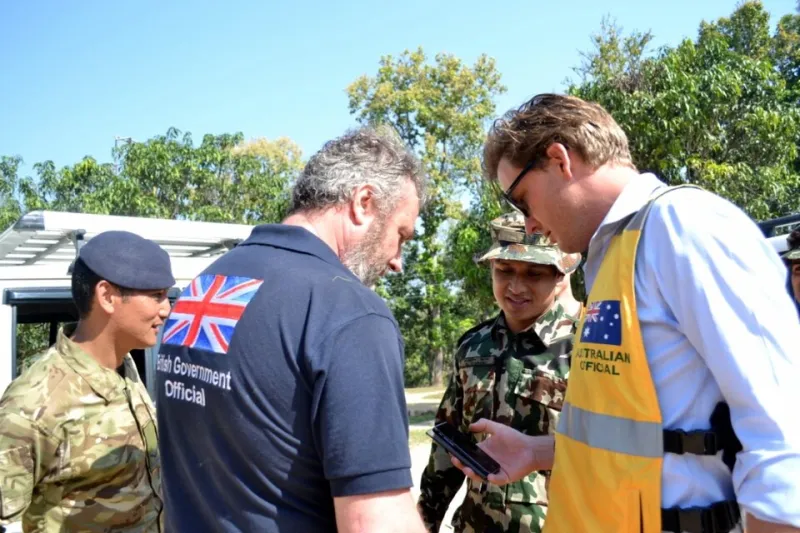
Photo: Shixart1985, CC BY 2.0, via Wikimedia Commons
You’re in a meeting, on a client call, or halfway through presentation Q&A. Someone asks a perfectly reasonable question and your brain quietly reports back: no answer available. In that moment, most of us reach for one of two bad options. We invent something that sounds plausible, or we apologise so thoroughly that the questioner wishes they’d stayed quiet.
There is a third option, and it tends to make you look more competent, not less: a calm, well-framed “I don’t know”. The trick is what you say next.
Why a rushed guess rarely feels safe for long
Bluffing can feel like the professional move in the moment. It keeps the conversation moving. It avoids an awkward silence. But a guess has a habit of coming back later — in a decision, a document, or a follow-up email — and by then it has usually grown into a bigger problem.
Over-apologising has a similar effect. If you spend thirty seconds explaining why you should have known, why the timing was tricky, and why you’re terribly sorry, the other person still doesn’t have their answer. You’ve simply added discomfort to the delay.
A straightforward acknowledgement does something different. It treats the conversation as a piece of work rather than a test of your worth. Most people would rather hear an honest “I don’t have that to hand” than watch someone improvise a number.
The three-step reply: acknowledge, commit, return
The response works best in three parts, and it can be delivered in under fifteen seconds.
First, acknowledge the gap clearly. Not vaguely. “I don’t have that figure to hand” or “I can’t confirm that accurately right now.”
Second, commit to finding out. Say who you’ll check with or what you’ll do. “I’ll check with the finance team” is better than “I’ll look into it”, because it tells the other person the question has landed somewhere real.
Third, set a specific time to return. “By 3pm today” or “by Thursday morning” beats “soon” every time. It turns an open loop into a small, trackable commitment.
Put together, it sounds like this: “I don’t have that figure to hand. I’ll check with the finance team and come back to you by 3pm today.”
No drama. No guess. No disappearing act.
In a meeting
Meetings are where the pressure to fill silence is strongest. Someone asks about a project milestone, a budget line, or a decision you weren’t in the room for. You can feel the group waiting.
Try: “I don’t know the exact answer on that. I’ll confirm with [name or team] and send a note round by [time] today.”
If you’re chairing, make the return visible: “Let’s capture that as an open point. I’ll come back with it by Thursday.” This does two things. It stops the room from re-asking the same question in different ways, and it gives you a clean action rather than a lingering sense that you failed to answer.
One small caution: avoid turning “I don’t know” into a conversational tic. If you genuinely have a partial answer, give the part you know and flag the part you don’t. “I know the deadline hasn’t moved; the resourcing figure I’ll need to check.” That’s more useful than a blanket blank.
On a client call
Clients are usually less interested in instant recall than in reliability. A calm “I’ll verify that and come back to you” can sound more professional than a confident answer that turns out to be wrong.
Try: “That’s not something I can confirm accurately right now. I’ll verify it with our delivery team and email you by 10am tomorrow.”
If the client needs something urgently, offer an interim update rather than a full answer: “What I can tell you now is that the review is still on track. The exact completion date I’ll confirm by 4pm today.”
Be careful with phrases like “someone will get back to you”. Unless you name a person and a time, it can sound like a polite way of closing the conversation. Own the return yourself where you can, even if the answer comes from someone else.
In presentation Q&A
Q&A is not a memory test, although it can feel like one. You’ve just delivered a polished set of slides, and now someone has found the one detail you didn’t rehearse.
A useful bridge is: “I don’t have that detail in front of me. I’ll take it away and follow up by [date].”
Keep a capture method nearby — a notebook, a shared document, the chat function, whatever works. If three unknowns appear in a row, don’t improvise three answers. Say: “I’ll gather those points and send one summary by Friday.” That sounds organised, because it is.
If you can answer part of the question, separate the known from the unknown. “I can confirm the pilot starts in March. The number of sites involved I’ll need to check and come back on.” This gives the audience something solid while keeping the rest honest.
The follow-up is where trust actually grows
An honest “I don’t know” only builds credibility if the return happens. Diarise it immediately, ideally before you leave the room or end the call. Send a short note when you have the answer: “Following up on your question about the supplier timeline — the revised date is 14 March. Thanks for flagging it.”
If you’re going to miss your own deadline, send a brief update before the deadline passes. “I’m still waiting on the figures; I’ll have them by midday tomorrow.” That small message protects the original commitment. Silence does the opposite.
When it becomes a pattern
Occasionally saying “I don’t know” is normal. Saying it several times a day is useful information. It might mean you need better briefing notes, access to a system, or a clearer sense of what you’re responsible for. Keep a note of the questions that catch you out. If the same topic keeps appearing, fix the gap rather than rehearsing more apologies.
A small phrase bank
- “I don’t have that to hand. I’ll confirm by [time].”
- “I can’t answer that accurately yet. Let me check and come back to you today.”
- “I don’t want to guess on that. I’ll find out and email you by [time].”
- “I know X; I need to check Y. I’ll send both by [time].”
- “That’s outside my area. [Name] is best placed to help; I’ll ask them and confirm by [time].”
The confident “I don’t know” isn’t about sounding clever in the moment. It’s about being the person who tells the truth, names the next step, and comes back when they said they would. That’s a reputation worth having.