Not Another Polished Paragraph: Putting a Human Tone Back Into Work Messages
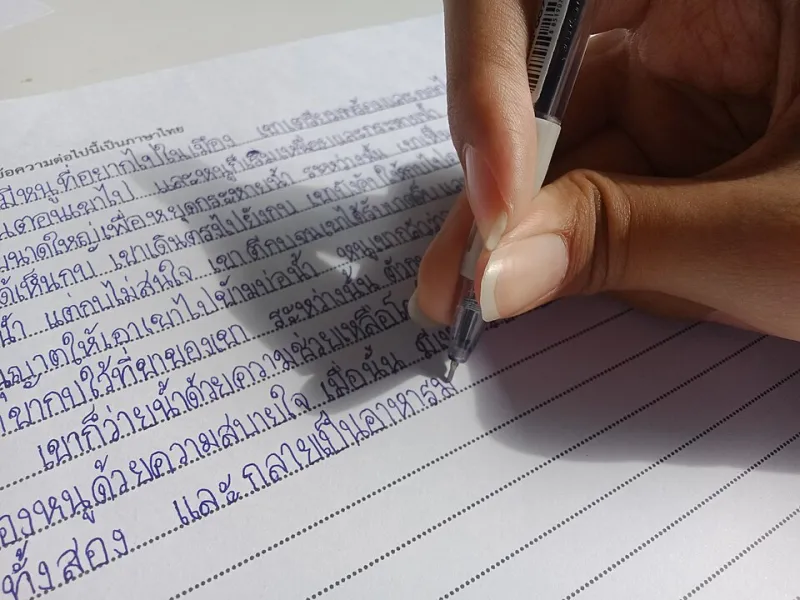
Photo: Jiafei Slay Queen, CC0, via Wikimedia Commons
Open your inbox and you can almost hear the template. ‘I hope this email finds you well.’ ‘I am writing to follow up on my previous message.’ ‘Please do not hesitate to contact me should you have any questions.’ None of it is wrong. It is just not quite human.
The problem is not that workplace writing is formal. The problem is that it is often generic. Speed, copied phrases and, increasingly, AI suggested replies all push us towards the same polished paragraph. It is efficient, but it can leave the reader wondering who is actually on the other end.
Why template voice creeps in
Templates are safe. They protect us from saying the wrong thing, especially in a UK workplace where directness can sometimes land as bluntness. If you are unsure how to phrase a request, a stock phrase feels like a small shield.
AI drafting makes this easier and more tempting. You type a rough instruction, and out comes a message that is grammatically perfect and emotionally neutral. That is useful for a meeting confirmation. It is less useful when you are telling a colleague that their work missed the mark, or asking for help when you are already behind.
The result is a kind of written wallpaper. Everyone recognises it, nobody feels spoken to, and the actual message can get lost in the politeness.
The UK balance: clear without curt
British workplace culture has a particular trap. We often soften a message so much that the point disappears. ‘I was just wondering if you might possibly have a moment to perhaps look at this?’ is not rude. It is also not clear.
At the other end, ‘Send me the report by Friday’ can read as curt, even if it is efficient. The middle ground is not more words. It is warmer clarity.
Start with the point. Add one human detail. Use a plain verb. ‘Could you send me the report by Friday?’ is clear and polite. ‘I know you are juggling a lot this week — could you send me the report by Friday?’ is clearer and warmer, because it acknowledges reality without turning the request into a paragraph.
Small edits that restore a person
You do not need to rewrite everything. A few small edits can make a message sound like it came from a human being rather than a policy document.
Use the person’s name once. Not three times. ‘Hi Sam’ is enough. Repeating names can feel like a sales email.
Start with something real. ‘Thanks for the update on Tuesday’ beats ‘I hope this email finds you well’ because it proves you were paying attention. If you have nothing real to say, go straight to the point. ‘Quick one on the budget’ is fine.
Cut the padding. ‘Just’, ‘quickly’, ‘kindly’ and ‘please be advised’ are often used to soften a message, but they can make it sound anxious or bureaucratic. ‘Please be advised that the deadline has changed’ becomes ‘The deadline has moved to Friday.’ Clearer, and no less polite.
Use contractions where they sound natural. ‘I’ll send it over’ is warmer than ‘I will send it over’ in most routine messages. But do not force it if the situation is formal. The aim is natural, not chummy.
Suggested replies are a starting point, not a script
AI suggested replies are useful for the boring bits: confirming a time, acknowledging a document, saying thanks. They are not good at context. They do not know that your colleague has had a difficult week, or that the client is already annoyed, or that the last email in the thread was passive-aggressive.
If you use a suggested reply, read it as if a stranger had sent it to you. Does it sound like something you would actually say? If not, change one line. Add a specific detail. Remove the phrase that makes you sound like a call centre.
For anything with emotion in it — bad news, feedback, an apology, a disagreement — write it yourself. Even a rough message with a human tone is better than a polished one that says nothing.
When plainer is more professional
There is a myth that professional writing must be formal. Often, the opposite is true. The more important the message, the clearer it should be.
If you are delivering bad news, do not bury it under three paragraphs of context. ‘We cannot make the Friday deadline. Here is what we can do instead’ is professional. It respects the reader’s time and does not pretend the problem is not there.
If you are correcting someone, be direct without being sharp: ‘I think the figure on page two should be £14,000, not £40,000 — can you check?’ That is plain, specific and easy to act on.
Warmth is not decoration. It is a signal that you see the person receiving the message. But warmth without clarity is just fog.
A small rewrite
Here is a typical template message: ‘I hope this email finds you well. I am just writing to kindly follow up on my previous message regarding the outstanding report, as per the deadline discussed.’
Here it is again, human: ‘Hi Sam — checking in on the report. Are we still on for Friday? If the data is holding things up, let me know what you need.’
The second version is shorter, clearer and no less polite. It also sounds like a person who works with Sam, not a system that has learned to imitate one.
Read it at the kettle
Before you send, read the message aloud. Would you say it to a colleague at the kettle? You do not need to write exactly as you speak — workplace writing still needs structure — but it should pass the human test.
If it sounds like a template, edit one line. Add a real detail. Cut a hollow pleasantry. Then send it. Clearer words, more confident conversations, and a message that sounds like you.